 |
 |
 |
 | Microseismic source localization using time-domain path-integral migration |  |
![[pdf]](icons/pdf.png) |
Next: Numerical examples Up: Methodology Previous: Efficient path-integral diffraction migration
|
|
|
|
| Microseismic source localization using time-domain path-integral migration | |
|
In the proposed workflow, we first extend passive seismic data 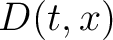 into a shifted domain
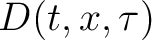 , in which
  represents the source onset time:
slice of
, we apply diffraction imaging to image passive seismic events, resulting in image
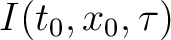 .
.
In the image volume
created by path-integral time-domain migration, we apply envelope stacking along axis so that sources can be highlighted at their true location in time coordinates.
Phase information is not discarded in this case because migration is applied before envelope stacking.
Additionally, we apply a Laplacian sharpening operator in the image domain after envelope stacking to emphasize the maxima for easier visual picking.
After spatial localization of passive seismic sources, each time-delay trace is extracted from image volume
at position ( ), showing the activation time of each source.
|
|
|
|
| Microseismic source localization using time-domain path-integral migration | |
|
